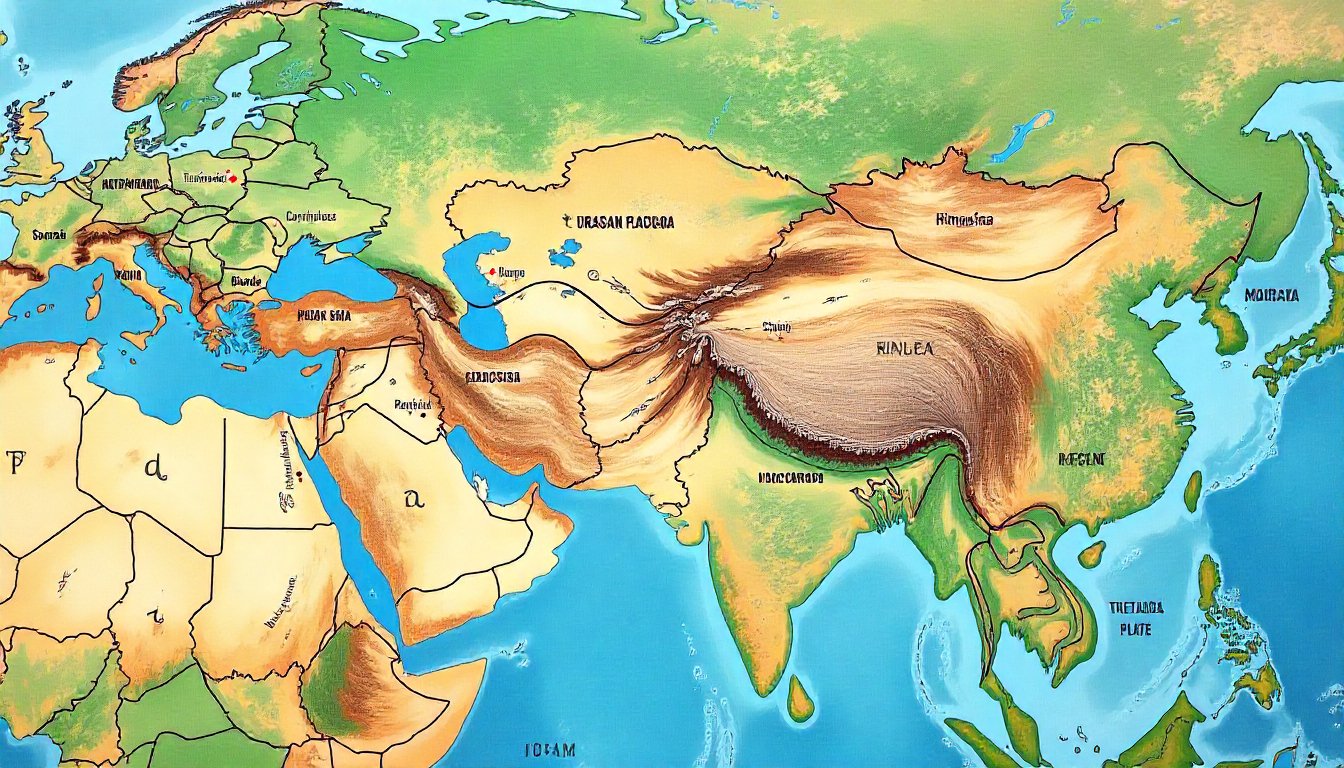
The Indian Tectonic Plate Split is more than a scientific theory—it’s a warning sign from deep within the Earth. Scientists have discovered that the Indian tectonic plate, which carries the entire Indian subcontinent, is tearing beneath the Tibetan Plateau. This underground movement is pushing the surface upward while deeper layers sink. The result? Tremendous stress building below the Himalayas—stress that could one day unleash a major earthquake, possibly measuring between 8 and 9 on the Richter scale.
If this happens, the devastation would reach across India, Nepal, and Bhutan, shaking mountains, rivers, and lives. Experts are watching the region closely, calling it one of the most unstable tectonic zones on the planet.
What Is the Indian Tectonic Plate Split?
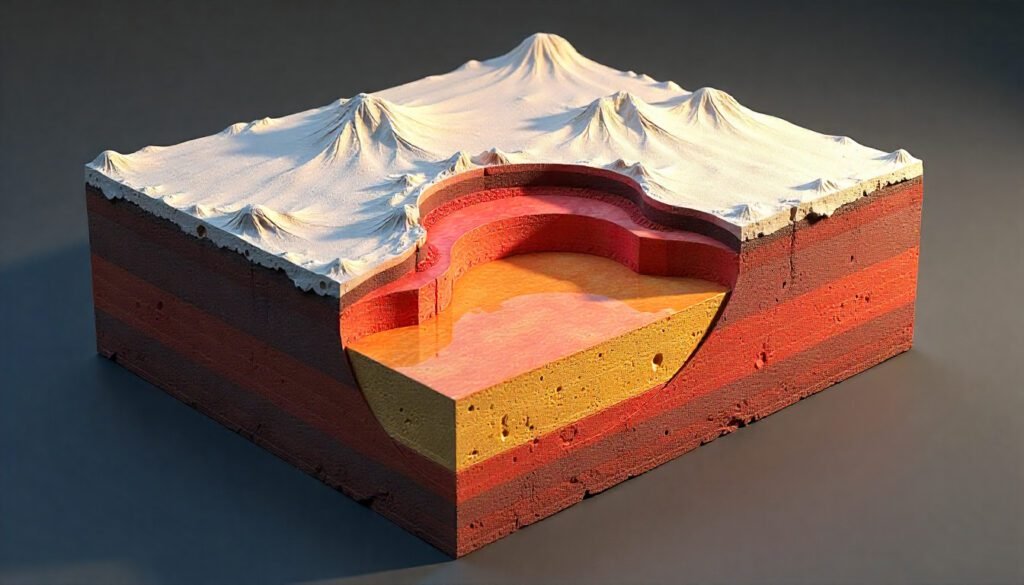
The Indian Tectonic Plate Split describes a slow, deep process happening around 100 kilometers underground. Imagine the Earth’s crust as a thick book—the bottom pages are peeling away while the top layers keep pushing forward. This “peeling” is known as delamination.
According to a Nature Communications Earth & Environment study, hundreds of seismic sensors detected waves bending oddly beneath southern Tibet. These signals reveal that the lower layer of the Indian Plate may be tearing away from the upper crust (Nature Communications Earth & Environment).
This means the split isn’t visible from the surface. India is not physically breaking in two—but its foundation is changing shape under immense pressure.
Why the Indian Tectonic Plate Split Matters
The Indian Plate has been colliding with the Eurasian Plate for over 50 million years. That collision built the world’s tallest mountain range—the Himalayas. But the story isn’t over. The collision continues, squeezing rock, lifting the peaks, and storing vast amounts of energy underground.
Now, scientists fear that the Indian Tectonic Plate Split could alter how this energy is released. The stress caused by peeling layers can change the direction and strength of future earthquakes. Experts from the US Geological Survey (USGS) say that the Himalayan belt could one day experience a “great earthquake,” meaning magnitude 8 or higher (USGS Earthquake Hazards Program).
Adding to the worry, the Himalayas are still rising—by about five millimeters every year. This continuous uplift shows that the collision, and possibly the split, is still very active.
The Science Behind the Split
Scientists use earthquake waves, satellite GPS, and radar data to study this phenomenon. When earthquakes happen, the vibrations travel through the Earth and reflect differently depending on rock type and density. By analyzing these patterns, researchers can create 3D images of the underground layers.
These images show parts of the Indian Plate dipping and bending, with sections breaking off. A 2024 AGU Journal of Geophysical Research paper explains that the crust and mantle are detaching in certain regions, creating a weak zone that could reshape the entire region (AGU Journal of Geophysical Research).
The European Space Agency (ESA) is also tracking subtle ground movements from space. Their satellites measure the rise and fall of the land to within millimeters (ESA Earth Observation Program). All evidence points to one truth: the Indian Plate is not static—it’s alive and evolving.
Could This Trigger a Megaquake?
That’s the question everyone wants answered. Some scientists believe that the Indian Tectonic Plate Split might lead to a super-earthquake in the future. The Main Himalayan Thrust fault, which runs beneath Nepal and northern India, could rupture in one long chain reaction, producing an event of magnitude 8.5 or more.
Such an earthquake could destroy cities, block rivers, and even shift the course of the Ganges or Brahmaputra. The 2015 Nepal earthquake (M7.8) showed only a glimpse of what’s possible. Still, scientists emphasize that while the potential is real, these events unfold over thousands of years—not overnight.
In the meantime, nations must focus on preparedness: earthquake-resistant buildings, early-warning systems, and strong community education programs.
Is There a Possibility of Volcanoes?
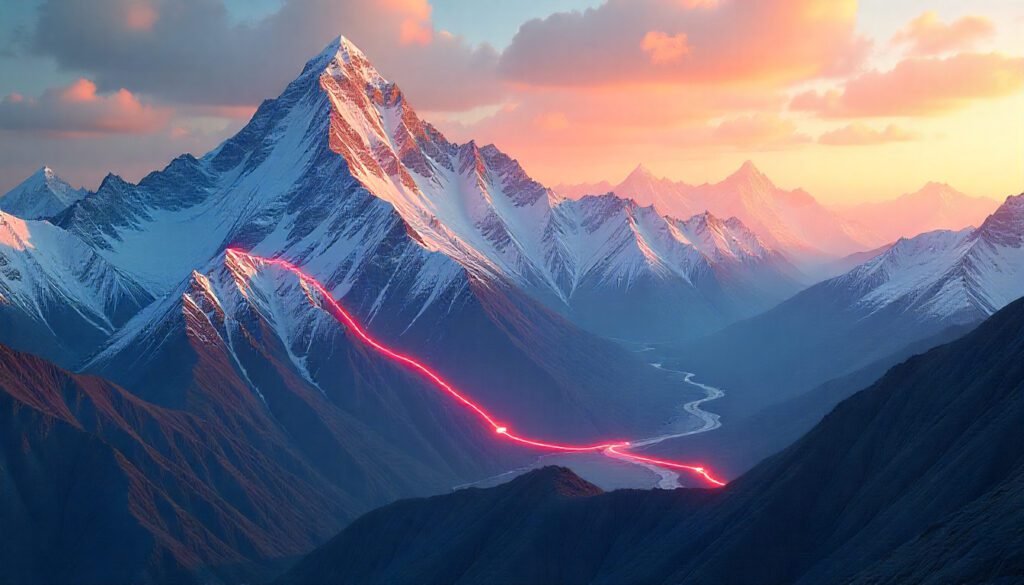
There have been claims that the Indian Tectonic Plate Split might eventually lead to volcano formation. While the idea captures imagination, most geologists remain cautious. The Himalayas are a “collision zone,” not a volcanic one.
However, delamination could allow hot mantle material to rise closer to the surface, potentially causing localized heating or geothermal changes. Over millions of years, this could create new volcanic activity—but not in the near future. As of now, there are no active volcanoes forming in the Himalayan region.
Human Impact and Preparedness
This isn’t just about rocks and science—it’s about people. The Indian Tectonic Plate Split could affect the lives of over 50 million people across mountain communities. Steep terrain means even small earthquakes can cause landslides, flooding, and road collapses.
Governments are beginning to act. Seismic retrofitting programs, awareness campaigns, and school safety drills are underway in some Himalayan towns. As the saying goes, “We can’t stop earthquakes, but we can stop them from becoming disasters.”
Frequently Asked Questions
Is India splitting in half?
No, the Indian Plate is not splitting on the surface. The split happens deep underground, within the mantle.
Can this cause an earthquake soon?
It’s not likely in the short term. The process takes millions of years, but it increases long-term earthquake potential.
How fast are the Himalayas rising?
Around 5 millimeters per year, based on GPS data.
Will volcanoes form in the Himalayas?
Not in our lifetime. While heat movement beneath the crust exists, there’s no evidence of magma reaching the surface.
Who monitors this?
Agencies like the USGS, ESA, and India’s National Centre for Seismology monitor tectonic activity and publish open reports.
The Bigger Picture
The Indian Tectonic Plate Split is a reminder that our planet is alive. Continents drift, mountains grow, and the ground beneath us shifts—even if we can’t feel it. The Himalayas may look eternal, but they are constantly changing.
This process connects us to the larger forces of nature—forces that built the world we live in and continue to shape its future. It also humbles us: humanity’s greatest cities and oldest temples stand on a planet that is never truly still.
My View and Thoughts
When I first read about the Indian Tectonic Plate Split, it felt both fascinating and frightening. It made me realize how fragile human life can be when measured against the power of the planet. We build our homes, our lives, and our dreams on ground we believe is solid—but deep below, that ground is moving.
To me, this discovery is not just a scientific finding—it’s a wake-up call. The Earth is warning us to live more responsibly, to plan our cities wisely, and to respect nature’s limits. We cannot stop the tectonic plates from moving, but we can control how prepared we are. Strengthening awareness, education, and environmental respect can save countless lives.
The Indian Tectonic Plate Split teaches one profound truth: the Earth doesn’t belong to us—we belong to it.
Outbound Links
- Nature Communications Earth & Environment study — https://www.nature.com/articles/s43247-025-02601-w — Peer-reviewed research describing the discovery of the plate split beneath Tibet.
- AGU Journal of Geophysical Research — https://agupubs.onlinelibrary.wiley.com/doi/10.1029/2024JB029815 — Explains crust–mantle detachment and tectonic delamination.
- USGS Earthquake Hazards Program — https://www.usgs.gov/programs/earthquake-hazards — Provides data and resources on earthquake hazards worldwide.
- National Geographic Plate Tectonics Overview — https://www.nationalgeographic.com/environment/article/plate-tectonics — Offers educational insights into global plate movement.
- ESA Earth Observation Program — https://www.esa.int/Applications/Observing_the_Earth — Tracks Earth’s surface motion and tectonic deformation via satellites.