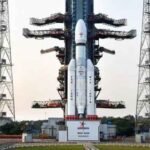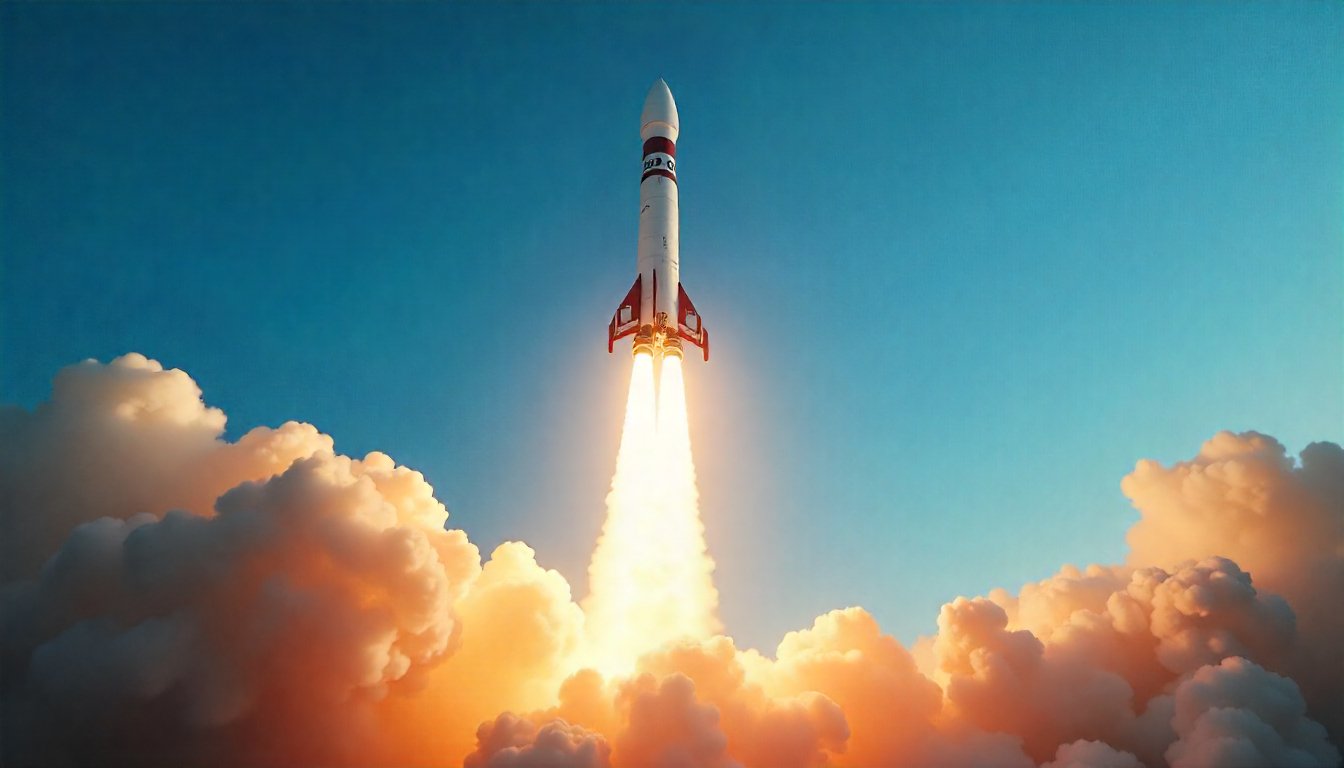
The Indian Space Research Organisation (ISRO) has steadily grown from a modest national program into one of the most respected space agencies in the world. Today, ISRO is entering a new era defined by advanced exploration missions, human spaceflight, deeper scientific inquiry, and a strong push to secure a larger share of the global space economy. Under the leadership of ISRO Chairman V. Narayanan, the organisation is preparing to launch seven new missions before the end of the current financial year and laying the foundation for projects that will shape India’s space journey over the next two decades.
This comprehensive overview explores ISRO’s future plans, ongoing missions, breakthrough goals, and the broader economic vision that aims to position India as a leading global space powerhouse by 2030 and beyond.
Seven Major Missions Planned Before March: Strengthening India’s Satellite Capacity
In his recent briefing, ISRO Chairman V. Narayanan confirmed that the organisation plans to launch seven missions by March of the current fiscal year. This rapid lineup underlines ISRO’s commitment to strengthening India’s communication, navigation, and Earth-observation capabilities.
These upcoming missions include:
1. New Communication Satellites
India’s digital transformation requires robust satellite-based connectivity. New communication satellite launches will enhance broadcasting, telecommunication, rural connectivity, and disaster-management networks.
Learn more about ISRO’s communication satellites at the official portal:
https://www.isro.gov.in
2. PSLV Launches
The Polar Satellite Launch Vehicle (PSLV) remains the backbone of India’s space mission successes. PSLV launches planned this year will deploy multiple satellites for scientific, commercial, and strategic applications.
Info on PSLV:
https://www.isro.gov.in/Launchers/PSLV.html
3. Uncrewed Gaganyaan Test Mission
One of the most anticipated missions is the next uncrewed test flight under the Gaganyaan Human Spaceflight Program.
Gaganyaan program details:
https://www.isro.gov.in/Gaganyaan.html
This test will validate safety systems such as crew escape, re-entry capabilities, guidance control, parachute deployment, and spacecraft integrity — all crucial for sending Indian astronauts to space.
Chandrayaan-4: India’s First Lunar Sample Return Mission
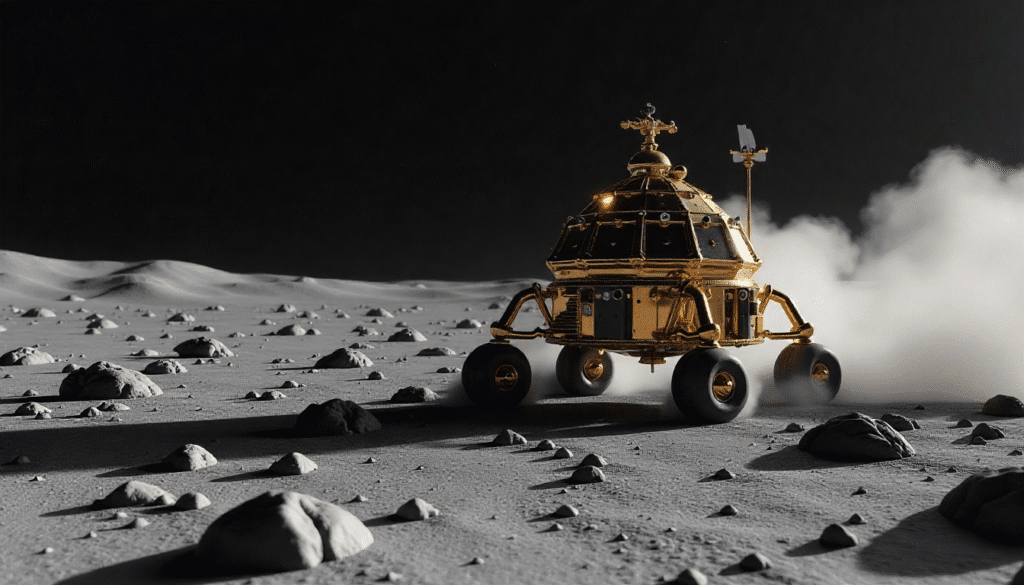
Among all ISRO future plans, the most ambitious scientific mission is Chandrayaan-4, which has already received major attention from the scientific community. The mission aims to retrieve soil samples from the Moon — something only the United States, Soviet Union, and China have achieved so far.
Why Chandrayaan-4 Matters
- It will deepen India’s understanding of lunar geology.
- It can unlock new clues about the origins of the Moon.
- It prepares India for future crewed lunar missions.
- It strengthens India’s position in global planetary exploration.
ISRO’s successful Chandrayaan-3 mission created the perfect foundation by demonstrating soft landing expertise on the lunar south pole. Chandrayaan-4 represents the natural next step.
Explore Chandrayaan missions:
https://www.isro.gov.in/Chandrayaan.html
Crewed Space Mission by 2027: India’s Next Giant Leap
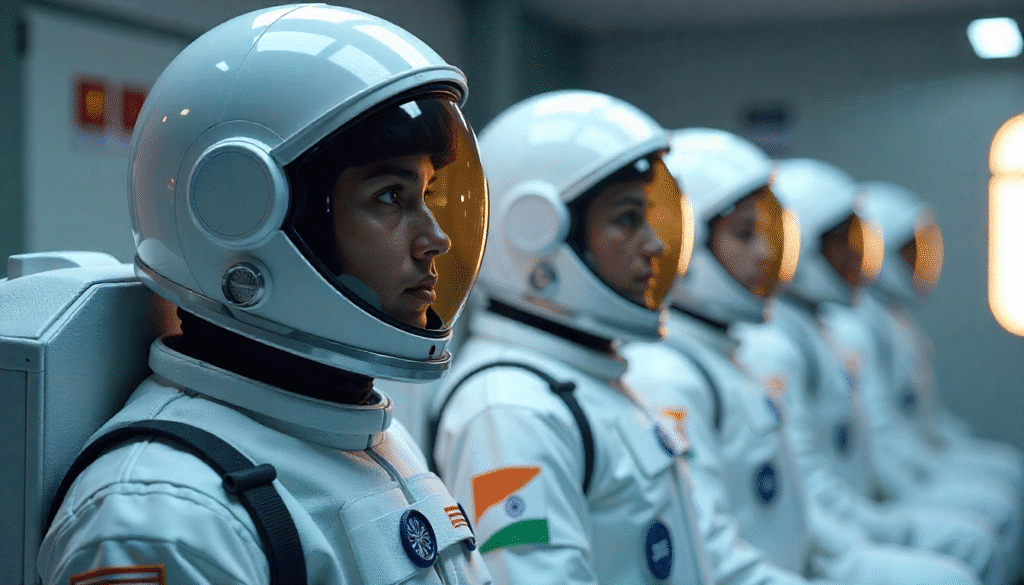
ISRO’s long-term vision includes sending Indian astronauts into space by 2027 aboard an entirely Indian-made vehicle and capsule. This will place India in an elite group of nations capable of human spaceflight.
Key Components Being Developed
- Human-rated launch vehicle (HLVM-3)
- Crew module and service module
- Environmental control & life support systems
- Astronaut training facilities (in collaboration with foreign agencies)
- Mission control and emergency response modules
India has already trained its first group of astronauts with support from the Gagarin Research & Test Cosmonaut Training Center in Russia. More upgrades to domestic astronaut training centres are already underway.
Human-spaceflight global resources (NASA reference for comparison):
https://www.nasa.gov/humans-in-space
Vision 2040: Landing an Indian Astronaut on the Moon
Perhaps the most inspiring of all ISRO future plans is the long-term goal — landing an Indian astronaut on the Moon by 2040.
This bold objective requires building multiple new capabilities such as:
- Heavy-lift launch vehicles
- Lunar landing and ascent vehicles
- Space stations for long-duration missions
- Advanced life-support systems
- Lunar habitats and robotics
- Deep space communication networks
ISRO has already announced a conceptual plan to build an Indian Space Station by 2035, which will serve as a stepping stone toward human exploration of deep space and the Moon.
Space station details (global reference):
https://www.nasa.gov/international-space-station
Boosting India’s Share of the Global Space Economy
One of ISRO’s major strategic goals is to increase India’s share in the global space economy from 2% to 8% by 2030. This is tied to the explosion in demand for satellite-based services, launch capabilities, Earth-observation data, and space-based navigation systems.
How ISRO Plans to Achieve This Growth
1. Encouraging Private Sector Participation
The rise of private Indian space companies like Agnikul, Skyroot, Dhruva Space, and Bellatrix Aerospace has already begun transforming the ecosystem. With technology transfer, lower launch costs, and policy reforms, India is positioning itself as a major global hub for commercial space activity.
Indian space startups overview (IN-SPACe):
https://www.inspace.gov.in
2. Developing Reusable Launch Vehicles (RLV)
Reusable vehicles can significantly reduce launch costs, making India competitive in international markets dominated by SpaceX. India’s RLV drop test missions have been successful, and more development is underway.
3. Expanding Navigation & Earth-Observation Services
With the growth of applications like agriculture monitoring, weather prediction, logistics, and national security, India’s satellite-based services are in high demand. The NavIC navigation system is being upgraded to global standards.
NavIC details:
https://www.isro.gov.in/IRNSS_NavIC.html
4. Creating Space Manufacturing Capabilities
ISRO is investing in new technology parks, satellite production units, and fuel system manufacturing facilities.
ISRO’s Focus on New Technologies
To fulfil its long-term vision, ISRO is working aggressively on multiple new technologies:
Semi-cryogenic engines for more powerful rockets
Advanced propulsion systems
Quantum communication for secure networks
Improved remote sensing and deep-space imaging
Robotics & space-grade automation for lunar and planetary missions
Small satellite launch vehicles (SSLV) for commercialisation
These advancements are central to expanding India’s capabilities and achieving future goals like the lunar sample return, human spaceflight, and extraterrestrial exploration.
Why ISRO’s Future Plans Matter for India and the World
ISRO’s ambitions are more than scientific milestones; they represent India’s growing technological independence and leadership in space. These plans create:
✔ New jobs in space tech
✔ Boost for startups
✔ Global launch market revenue
✔ Defence and strategic advantages
✔ Inspiration for future scientists and engineers
With each passing year, ISRO establishes India as a nation capable of scientific excellence, technological innovation, and global influence.
Conclusion
ISRO’s journey from launching small payloads to aiming for crewed lunar missions is a remarkable example of visionary leadership and consistent innovation. The organisation’s roadmap — launching seven missions this year, advancing Gaganyaan’s uncrewed tests, pioneering Chandrayaan-4’s lunar sample return, training astronauts for a 2027 crewed mission, and preparing for a Moon landing by 2040 — places India firmly in the front row of global space exploration.
With a strong push for private sector growth and advanced technologies, ISRO is set to increase India’s global space economy share from 2% to 8% by 2030. As the world watches, India is preparing for a future where it stands among the most influential spacefaring nations.
ISRO’s future plans are bold, inspiring, and deeply transformative — a true testament to India’s growing space legacy.