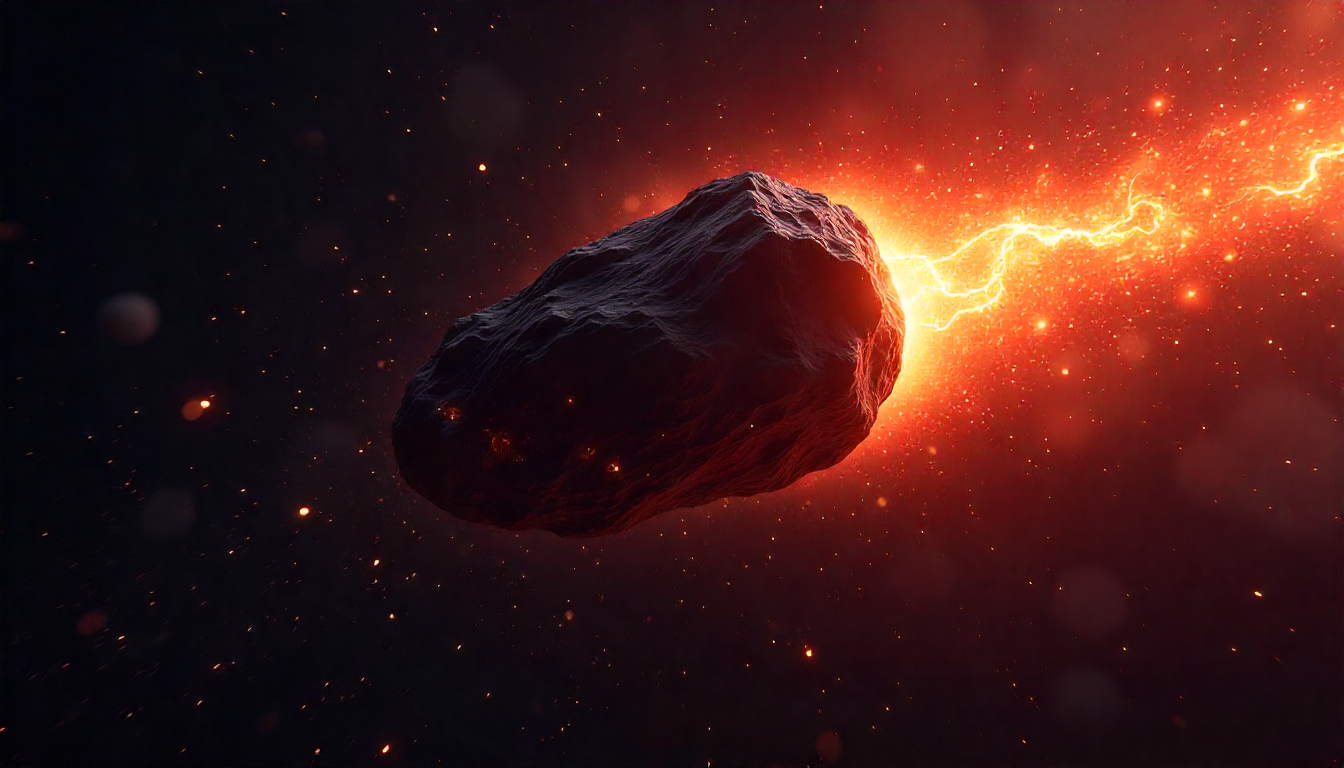
The massive asteroid 2019 UT6 is making headlines as one of the most closely watched near-Earth objects of this decade. This massive asteroid 2019 UT6 is approximately 440 feet (134 meters) wide and races through space at nearly 47,000 km/h. NASA confirms that the massive asteroid 2019 UT6 will make a safe but significant close approach on November 25, 2025, passing Earth at a distance of 2.39 million kilometers.
You can follow official tracking updates about the massive asteroid 2019 UT6 on NASA’s Asteroid Watch:
https://www.jpl.nasa.gov/asteroid-watch
What Exactly Is the Massive Asteroid 2019 UT6?
The massive asteroid 2019 UT6 belongs to the Apollo class of near-Earth asteroids—objects whose orbits cross Earth’s orbital path. Because of its size and orbit, the massive asteroid 2019 UT6 is officially listed as a Potentially Hazardous Asteroid.
For its scientific profile and orbital details, you can check its dedicated information page on SpaceReference:
https://www.spacereference.org/asteroid/2019-ut6
The massive asteroid 2019 UT6 is NOT expected to hit Earth, but its size makes it important to study.
How Close Will the Massive Asteroid 2019 UT6 Come?
On November 25, 2025, the massive asteroid 2019 UT6 will pass Earth at 2.39 million km, which is about six times the distance from Earth to the Moon. Although this is considered safe, the massive asteroid 2019 UT6 is passing close enough for scientists to observe its surface, rotation, and orbit more accurately.
Real-time orbital updates of the massive asteroid 2019 UT6 can be found through the Minor Planet Center, the official worldwide authority for asteroid tracking:
https://www.minorplanetcenter.net/
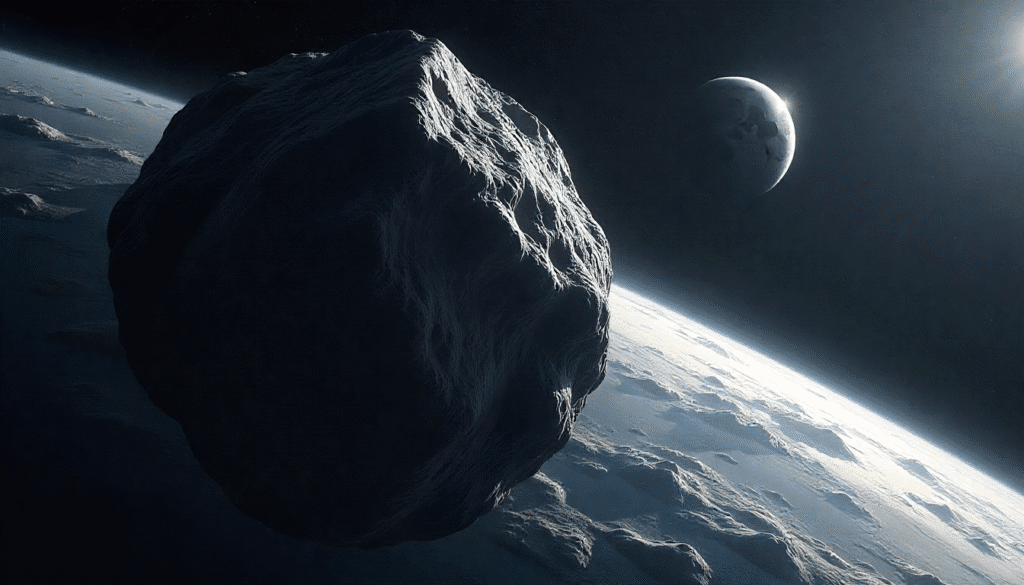
How Fast Is the Massive Asteroid 2019 UT6 Traveling?
The massive asteroid 2019 UT6 travels at more than 47,000 kilometers per hour—fast enough to circle Earth in under 30 minutes. This extreme speed makes precise tracking essential. The massive asteroid 2019 UT6 moves predictably through space, but scientists still observe it carefully during close passes.
NASA uses radar systems and advanced optical telescopes to monitor objects like the massive asteroid 2019 UT6, refining orbit calculations with each new measurement.
Scientists Are Monitoring the Massive Asteroid 2019 UT6
Even though the massive asteroid 2019 UT6 poses zero impact threat during the 2025 flyby, it provides a major opportunity for scientific research. Studying the massive asteroid 2019 UT6 helps experts:
- Improve asteroid orbit prediction models
- Strengthen planetary-defense systems
- Understand asteroid spin rates and surface features
- Evaluate how sunlight affects asteroid movement (Yarkovsky effect)
- Test improved radar and infrared detection technologies
NASA’s Planetary Defense Coordination Office studies objects like the massive asteroid 2019 UT6 to help humanity prepare for future threats.
What If the Massive Asteroid 2019 UT6 Ever Hit Earth?
Although the massive asteroid 2019 UT6 is NOT going to hit Earth in 2025, scientists often calculate “what if” scenarios to prepare for the future. If the massive asteroid 2019 UT6 struck Earth:
- It could flatten an entire city
- Shockwaves would destroy structures many kilometers away
- Heat blasts could ignite widespread fires
- Impact energy would equal multiple nuclear explosions
The dinosaur-extinction asteroid was 10 kilometers wide—far larger than the massive asteroid 2019 UT6—but even a 134-meter asteroid can cause severe regional destruction.
Thankfully, all current models confirm that the massive asteroid 2019 UT6 is safe during its upcoming approach.
Frequently Asked Questions About the Massive Asteroid 2019 UT6
1. Will the massive asteroid 2019 UT6 hit Earth?
No. The massive asteroid 2019 UT6 will pass at a safe distance with zero risk of impact.
2. Why is it called potentially hazardous?
Because the massive asteroid 2019 UT6 is large and its orbit sometimes comes close to Earth’s orbit—so scientists monitor it carefully.
3. Who is tracking the massive asteroid 2019 UT6?
NASA, the European Space Agency, global observatories, and the Minor Planet Center monitor the massive asteroid 2019 UT6 daily.
4. How big is the massive asteroid 2019 UT6?
About 440 feet (134 meters)—as tall as a 40-story building.
5. Can Earth feel any effects during the close approach?
No. The massive asteroid 2019 UT6 will be too far away to affect Earth in any physical way.
Conclusion
The massive asteroid 2019 UT6 offers a rare and valuable chance for scientists to study a large near-Earth object up close without any danger to our planet. While the massive asteroid 2019 UT6 poses no threat to Earth during its 2025 flyby, the event highlights the importance of ongoing asteroid tracking and planetary-defense research.
Thanks to advanced space-monitoring systems and global scientific cooperation, we can observe the massive asteroid 2019 UT6 safely, learn from it, and use that knowledge to better protect Earth in the future.
This encounter is not a threat—it is an opportunity for science, awareness, and preparedness.