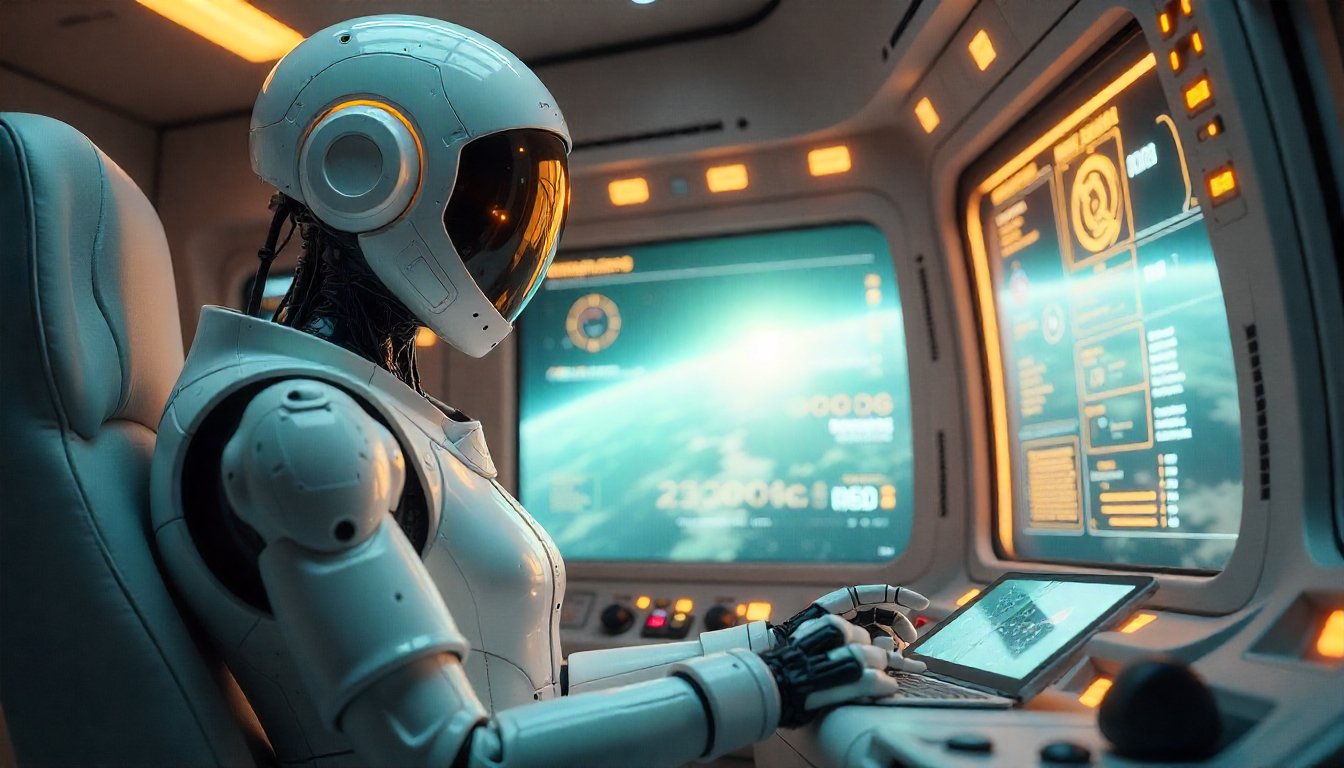
India is preparing to take one of the most important steps in its space history. The Vyommitra Gaganyaan Mission is not just another test flight—it represents India’s entry into the era of human space exploration. And leading this milestone is a very special passenger: Vyommitra, India’s first humanoid space robot.
This mission marks a turning point in the nation’s journey towards sending Indian astronauts—Vyomanauts—into space by 2027.
1. A New Chapter Begins: Vyommitra and the Gaganyaan Vision
The Gaganyaan programme, India’s first human spaceflight initiative, has now reached a crucial phase. According to ISRO Chairman Dr. V. Narayanan, nearly 90% of mission development is complete. The remaining steps include final validation, environment testing, and a critical orbital flight test.
As part of this validation, ISRO will launch the Jeevan test flight—an uncrewed mission aimed at testing the safety, performance, and life-support systems of the spacecraft. And the star of this mission is none other than the humanoid robot Vyommitra.
She is designed to act like a human, interact with humans, and perform tasks that real astronauts will perform in space.
▶ Official ISRO updates:
https://www.isro.gov.in
2. Meet Vyommitra: India’s First Humanoid Space Astronaut
Vyommitra is not an ordinary robot. She is a humanoid, meaning she resembles a human in shape, speech, and behavior. Her name comes from two Sanskrit words:
- Vyoma → Space
- Mitra → Friend
Together meaning: “Friend in Space.”
This friendly robot can:
- Speak in English and Hindi
- Recognize human voices
- Respond to commands
- Monitor environmental conditions
- Conduct experiments inside the spacecraft
- Provide real-time data to mission control
Vyommitra’s mission is critical—she will act as a human-like test subject, ensuring every system aboard Gaganyaan is safe for real astronauts.
3. Why Vyommitra? The Science Behind a Robotic Astronaut
The Vyommitra Gaganyaan Mission is more than a technology demonstration—it is a safety revolution.
Sending humans into space is extremely challenging. The environment in Low Earth Orbit involves:
- Zero gravity
- Intense radiation
- Extreme temperature fluctuations
- High pressure differences
Vyommitra carries sensors that monitor:
- Temperature
- Pressure
- Humidity
- Oxygen and CO₂ levels
- Cabin atmosphere stability
These readings help confirm if the spacecraft’s life-support systems are ready for human missions.
Her presence ensures the safety of the four selected Indian astronauts, who will fly in 2027.
4. The Jeevan Test Flight: Crucial Step Before Sending Humans
The upcoming Jeevan flight test is the final turning point before India sends real humans into space. This test will:
- Validate the spacecraft’s performance
- Test emergency escape sequences
- Confirm crew module safety
- Monitor real-time data under space conditions
- Ensure the LVM3 human-rated rocket performs flawlessly
The spacecraft will stay in Low Earth Orbit, facing actual space conditions including zero gravity and micro-radiation levels.
This helps ISRO understand the exact behavior of systems under real space stress.
5. Three Uncrewed Missions: G1, G2, and G3
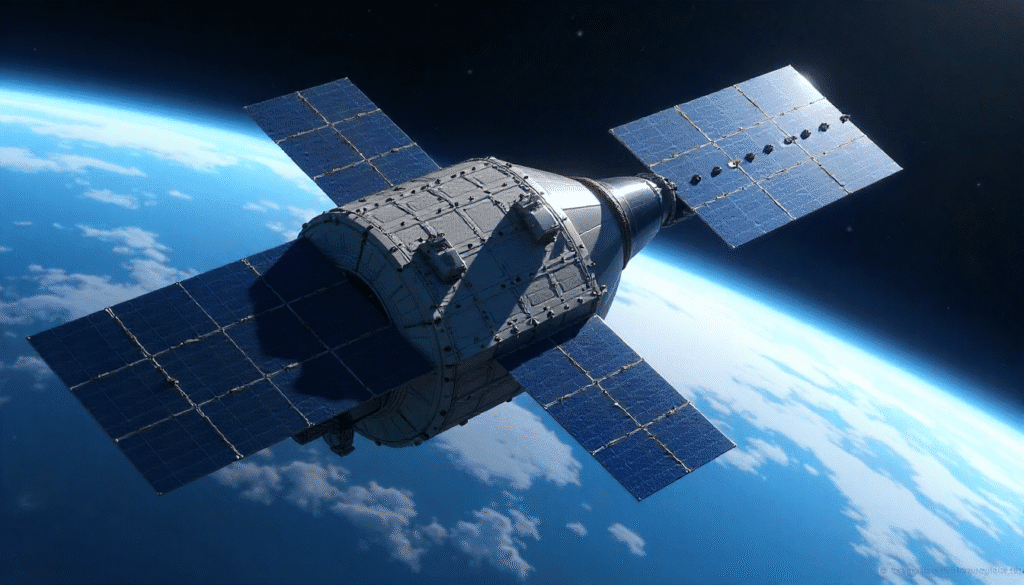
Before India’s first human spaceflight launches in 2027, ISRO has planned three uncrewed test flights:
• G1 Mission
Initial testing of crew module, propulsion, and avionics.
• G2 Mission
Testing life-support systems, thermal protection, and orbit stability.
• G3 Mission
Full-scale rehearsal mission with Vyommitra’s advanced operations.
These missions will confirm that the human-rated LVM3 rocket—the same rocket that successfully delivered Chandrayaan-3 to the Moon—is ready to carry astronauts.
▶ Chandrayaan-3 official details:
https://www.isro.gov.in/Chandrayaan3
6. The Vyomanauts: India’s Future Space Travelers
ISRO has already selected four Indian astronauts for the human mission. They have undergone intensive training at:
- ISRO Astronaut Training Centre, Bengaluru
- Yuri Gagarin Cosmonaut Training Centre, Russia
Their training includes:
- Spacecraft operation
- Zero-gravity simulations
- Survival training
- High-G tolerance
- Space medicine
- Emergency evacuation
Once the Vyommitra Gaganyaan Mission succeeds, these four astronauts will be ready for India’s first human spaceflight.
7. Why Gaganyaan Matters: India Joins the Global Elite
Once Gaganyaan is successful, India will join a very exclusive club—nations capable of sending humans into space independently:
- United States
- Russia
- China
- India (upcoming)
The world is watching India closely because ISRO continues to achieve remarkable feats at a fraction of global cost.
India’s space story is no longer about catching up—it is about leading the new wave of affordable, intelligent, and sustainable space innovation.
▶ NASA on India’s human spaceflight partnership:
https://www.nasa.gov
8. Vyommitra’s Role in the Future of India’s Space Exploration
Vyommitra’s success could lead to:
- Fully robotic space maintenance teams
- AI-driven research modules
- Advanced humanoid space assistants
- Deep-space robotic missions
- Space station collaborations
She represents a future where robots and humans work together in space.
Vyommitra may very well become the face of India’s next-generation space ambitions.
9. Final Thoughts: A New Dawn for India’s Human Space Era
The Vyommitra Gaganyaan Mission is more than a technological leap—it is a symbol of India’s ambition, intelligence, and courage. From launching satellites on bicycles to preparing humanoid astronauts, India’s space journey has come full circle.
Vyommitra is more than a robot.
She is a message to the world:
“India is ready for human spaceflight.”
When she rises into the sky during the Jeevan test flight, she will carry with her not just sensors and instruments, but the hopes of 1.4 billion Indians.